
As many times as Steve and I have visited the Besthoff Sculpture Garden, we have never explored the New Orleans Museum of Art right next door!
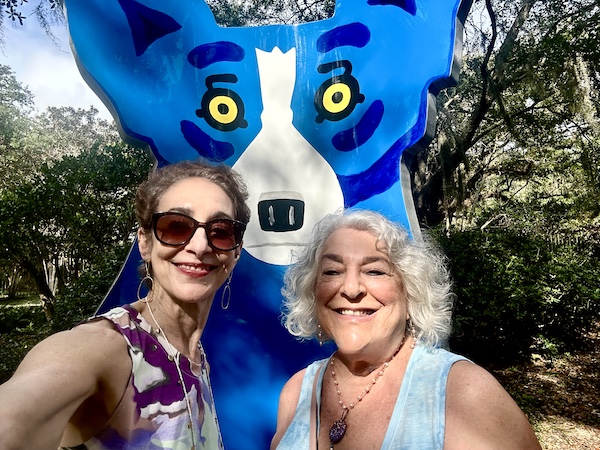
Gail and Me with George Rodrigue’s Blue Dog
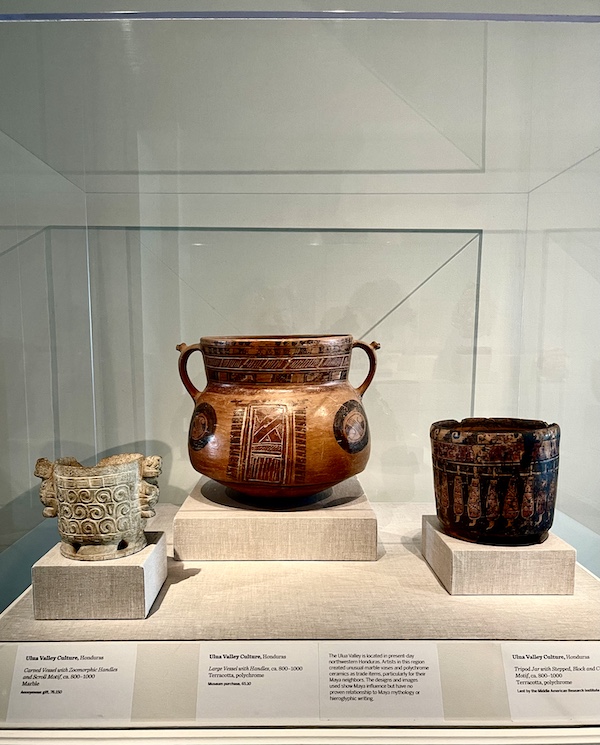
Honduran artifacts dating back to 800 to 1000 AD
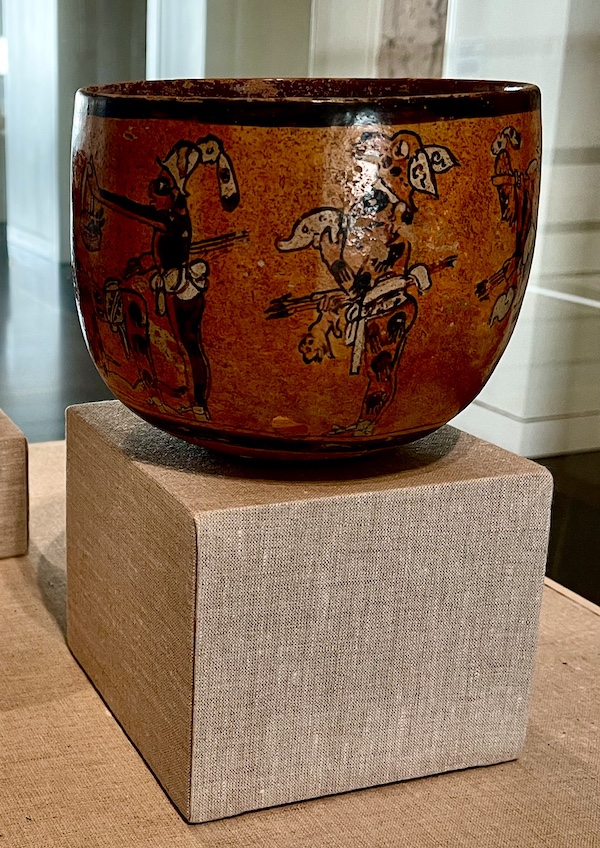
Maya Culture, Guatemala, El Peten
Bowl Depicting a Hunting Ritual ca. 600-800
Terracotta, polychrome
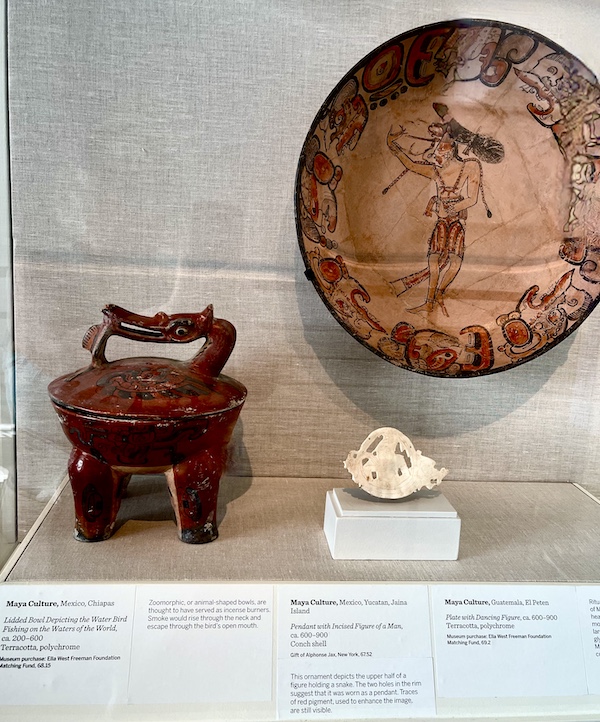
Display of Maya Culture artifacts from Mexico, Yucatan and Jaina Island, ca. 600-900
The perfect opportunity for a visit there arose when my cousin flew in from Southern California for a few days. My cousin Gail and her husband are who we spend all of our time with when we stay in Redlands Ca. So we were quite thrilled that we would get to show Gail “our” New Orleans.
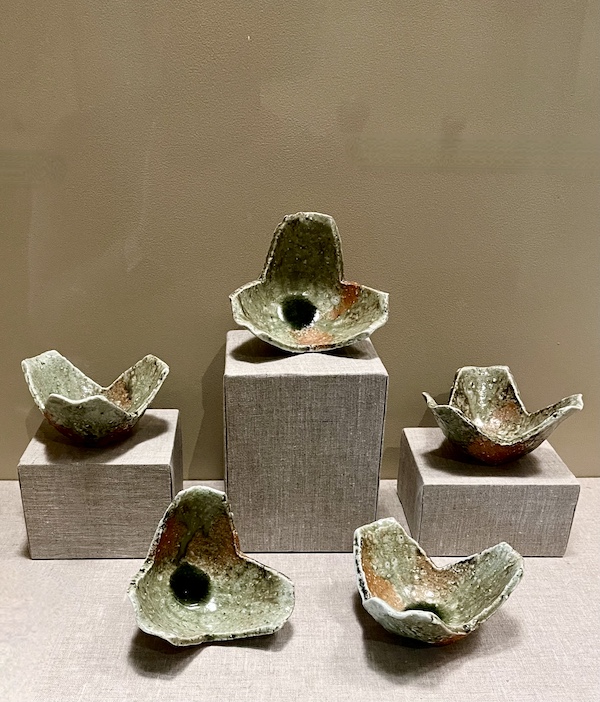
Five Plates in Split Peppercorn Shape by Fujioka Shuhei, Japanese, mid to late 1900s, stoneware, natural ash glaze
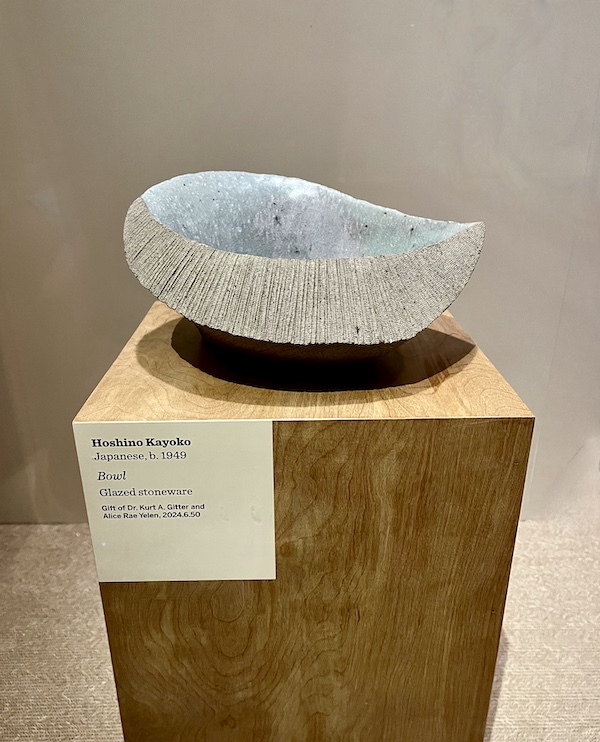
Japanese Glazed Stoneware Bowl
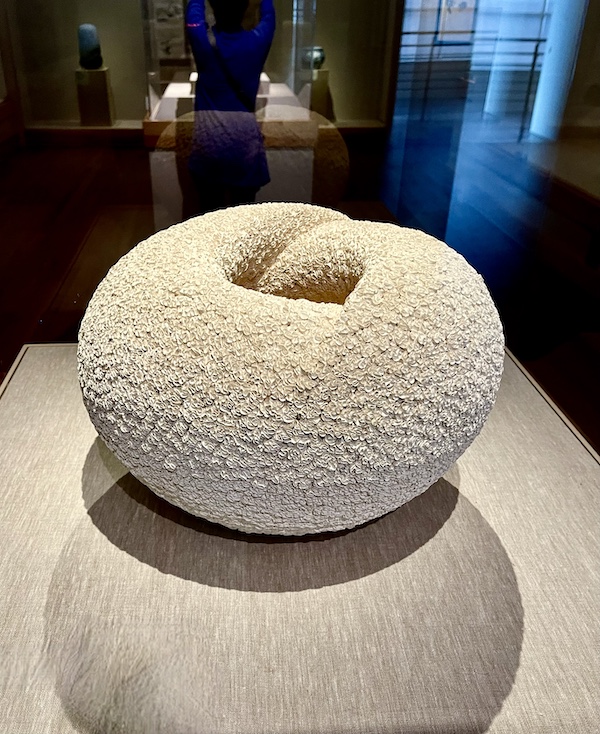
Fuka (Hatchling), 2022 by Hattori Makiko, Japanese of Unglazed porcelaneous stoneware
As is our tradition, we started off with coffee and beignets at the City Park location of Café Du Monde. After that Steve bid us adieu, so that Gail and I could have some cousins time.
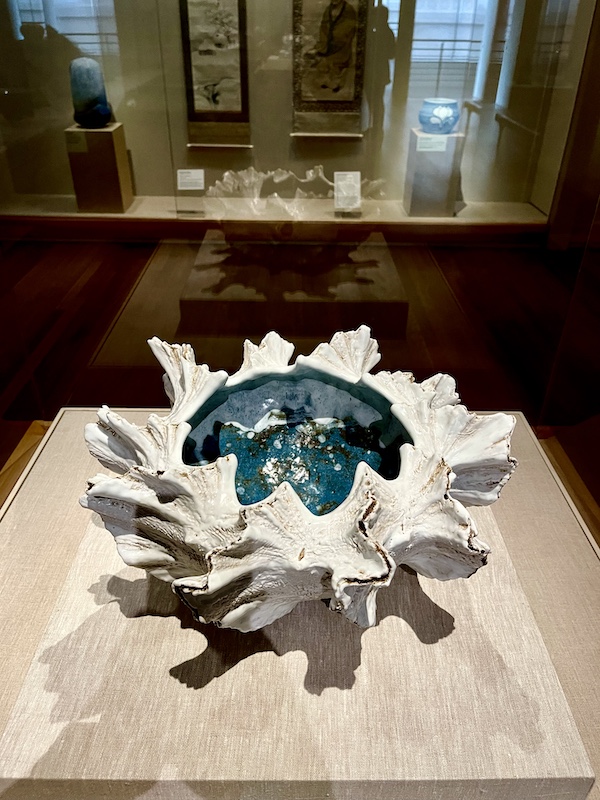
Shell Vase by Koike Shoko, Japanese, of stoneware with sand glaze
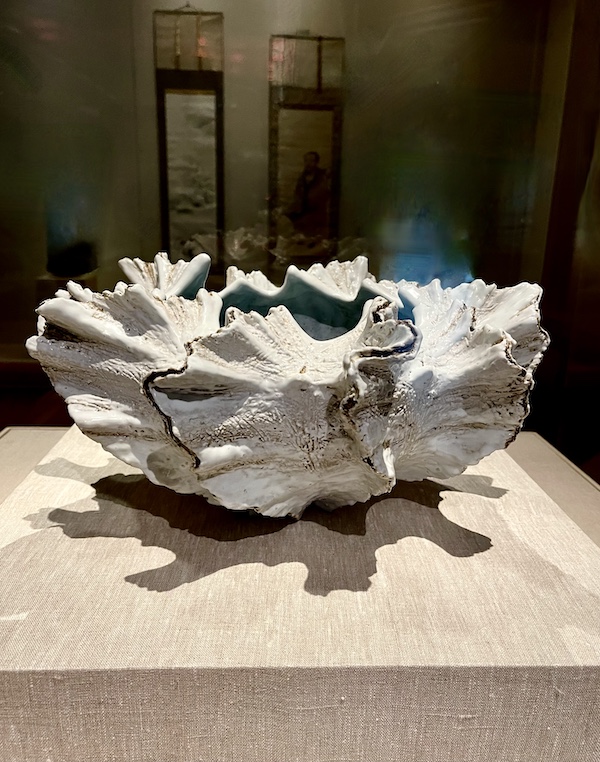
Side view of Shell Vase
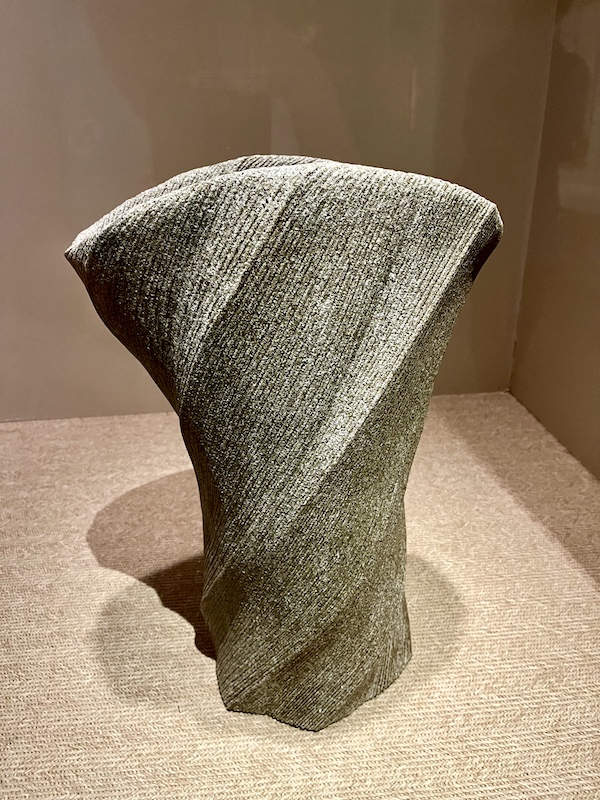
Pleated Double-wall Vessel, glazed stoneware by Japanese artist Sakiyama Takayuki
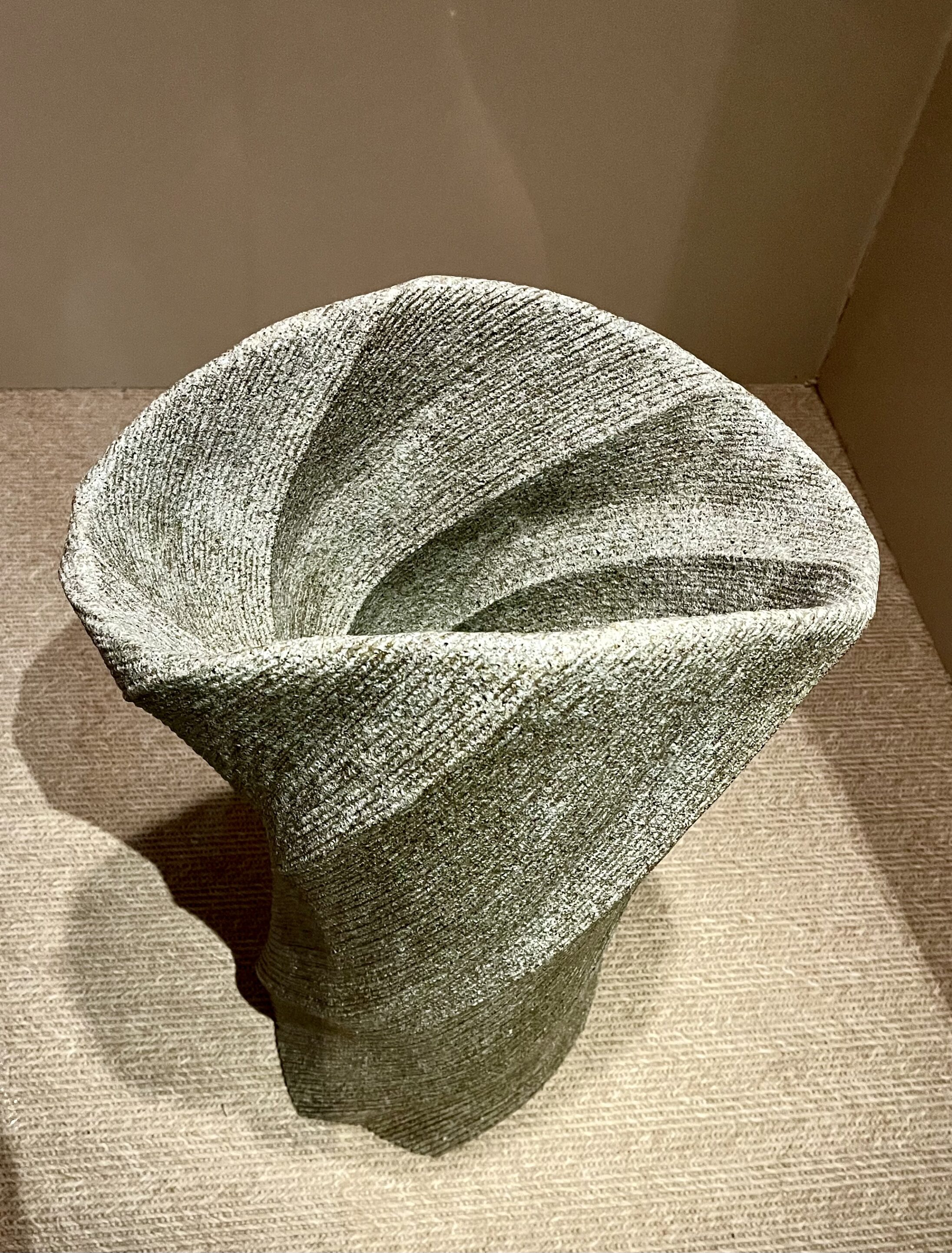
Looking inside the Pleated Double-wall Vessel
We strolled through the Sculpture Garden on our way to the New Orleans Museum of Art. We only lingered at the Sculpture Garden long enough to take a selfie with one of my favorite pieces of art there. Local artist George Rodrigue has a three sided sculpture of a Blue Dog, a Red Dog and a Yellow Dog that’s nested in the bushes.
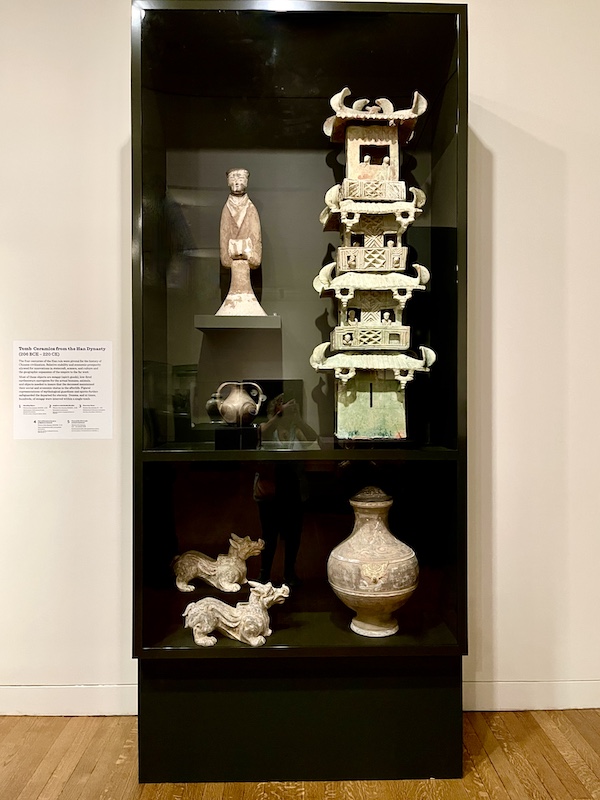
Tomb Ceramics from the Han Dynasty 206 BCE to 220 CE
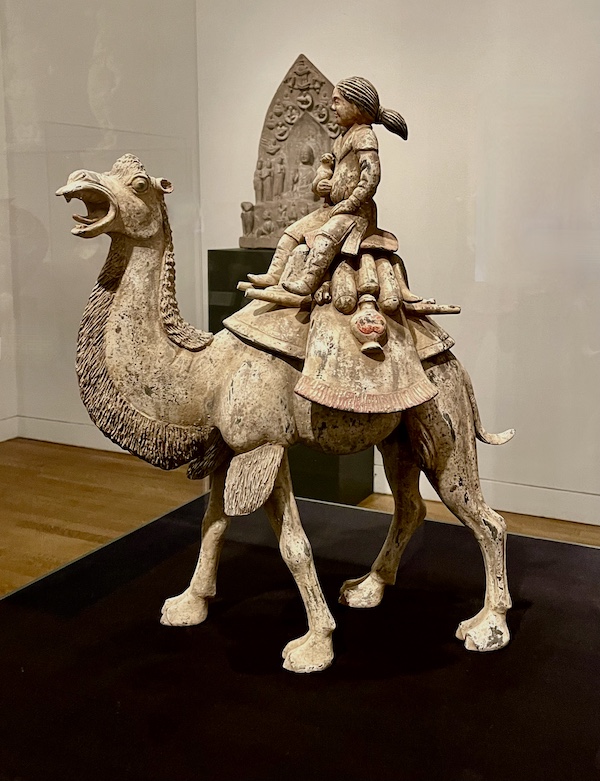
Bactrian Camel with Rider holding a small animal, Tang dynasty, 7th century, of gray earthenware, molded, carved and applied with traces of cold-painted color
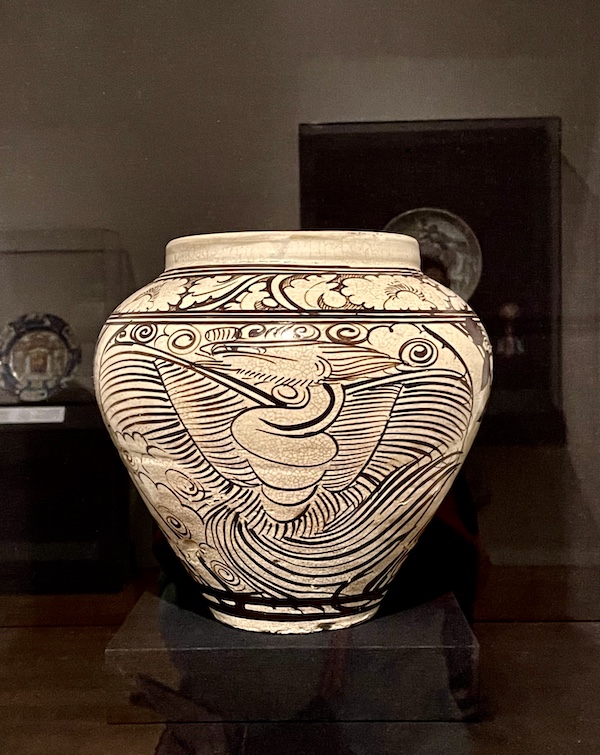
Jar with Decoration of Phoenix and Dragon, Jin-Yuan Dynasty 13th-14th century, stoneware, white slip, brown slip decoration under clear glaze
Our garden path led us to the entrance of the beautiful New Orleans Museum of Art, also known as NOMA.
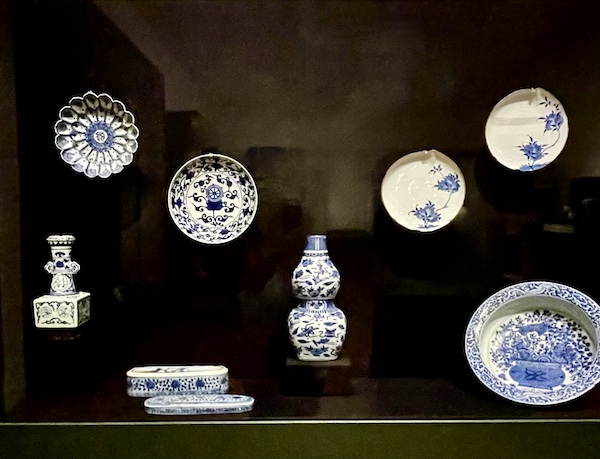
Blue and White Porcelains of the Ming Dynasty, 1368-1644
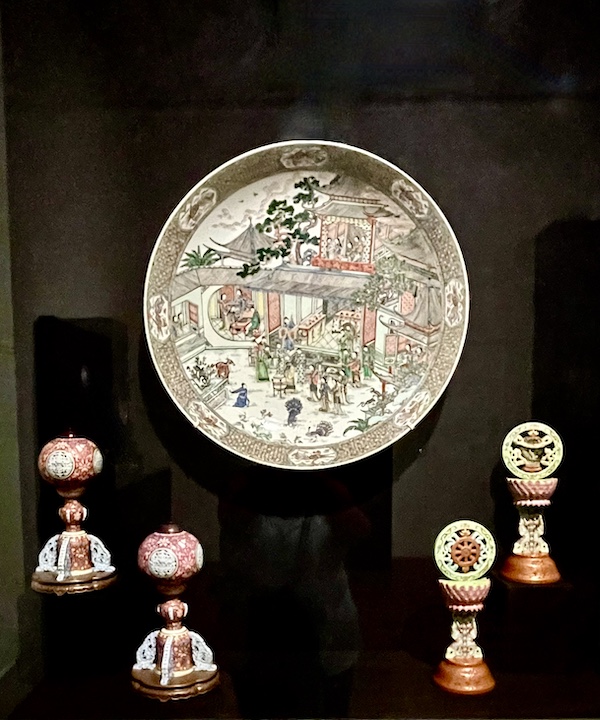
Polychrome Enamels of the Qing Dynasty, 1644-1911
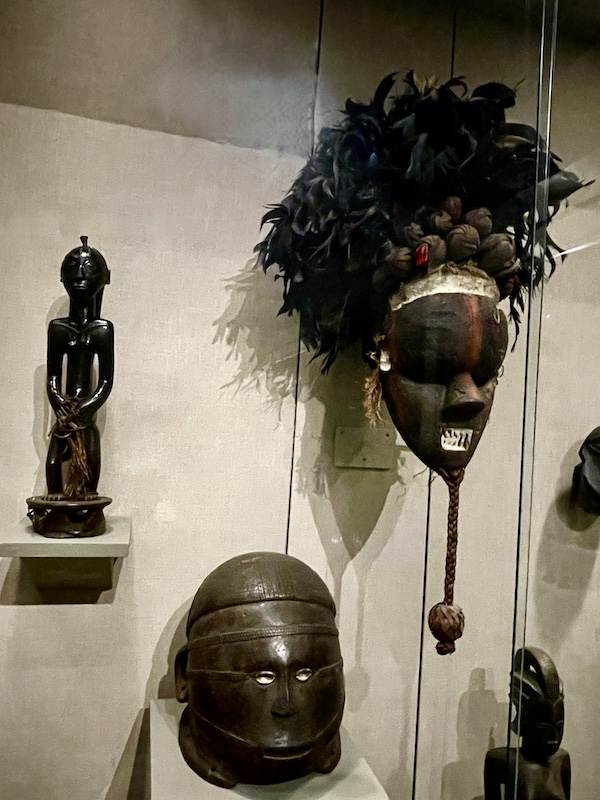
African Masks and Artifacts
NOMA is the city’s oldest fine arts establishment. It opened on December 16, 1911 with a collection of only nine works of art. Oh my has that collection grown from its meager beginning. Now NOMA is home to a very impressive permanent collection of almost 50,000 works of art. It has become one of the top art museums in the South due to its continual expansion and growth.
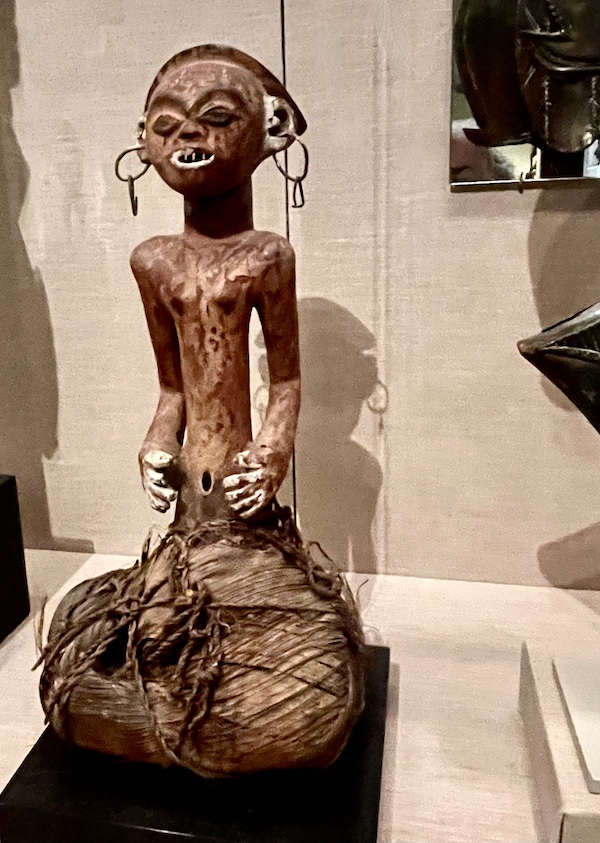
Female Guardian Figure with Reliquary Bundle by the Lumbo Peoples, Gabor made of wood, iron, rope, palm frond fiber and pigment
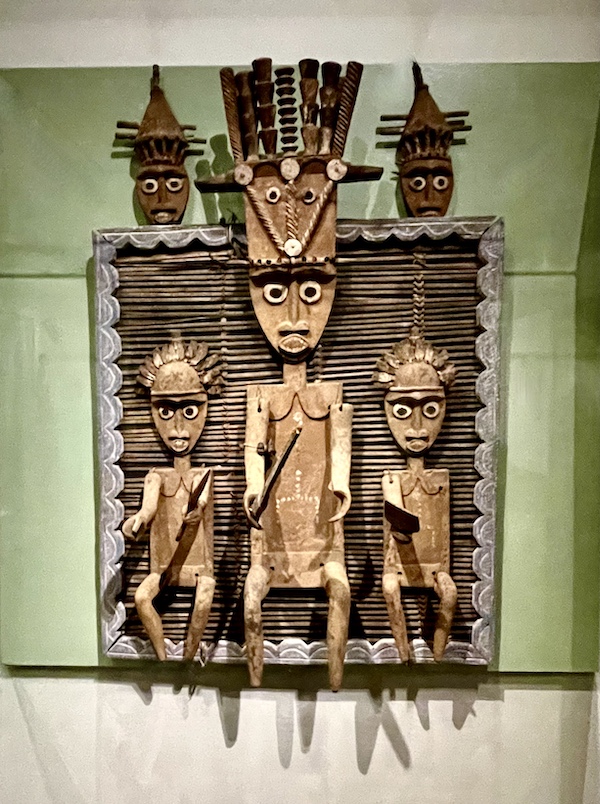
Ancestor Memorial Screen, late 19th-early 20th century of wood, wicker and pigment
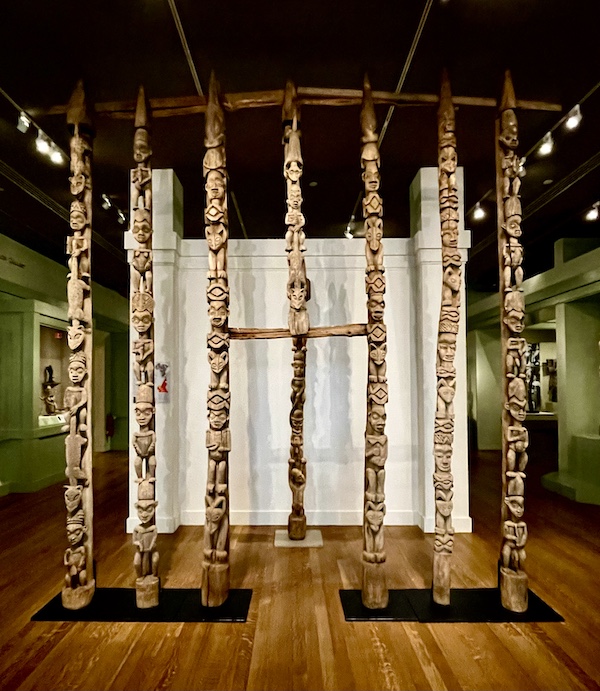
Seven Exterior and One Interior Palace House Posts, circa early 20th century of wood with traces of pigment
The permanent collection at New Orleans Museum of Art is well known for having a strong presence in French and American art, photography and glass. In addition there’s an ever growing collection of African and Japanese works.
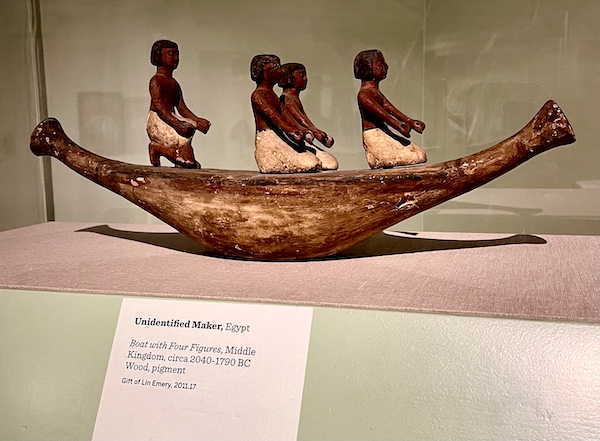
Boat with Four Figures
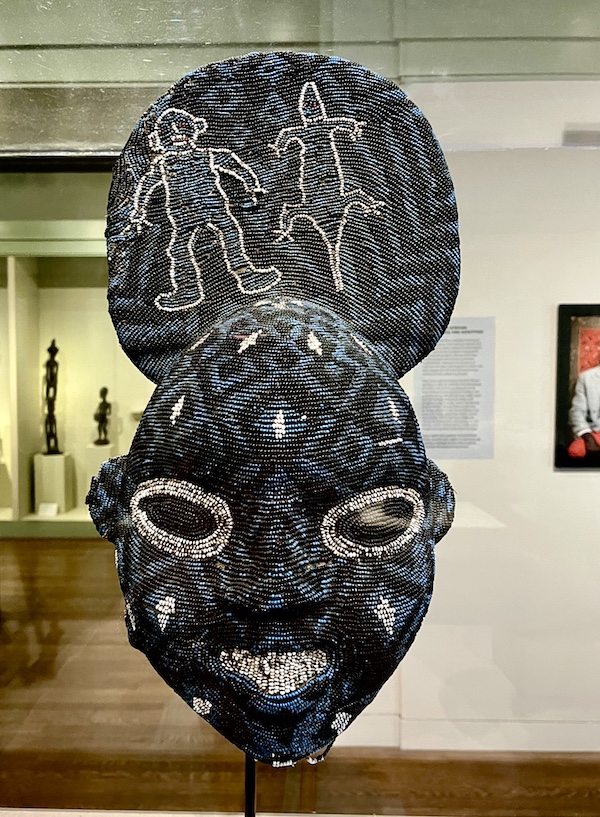
Crested Helmet Mask by Kom Peoples, Cameroon of glass beads, wood and cloth
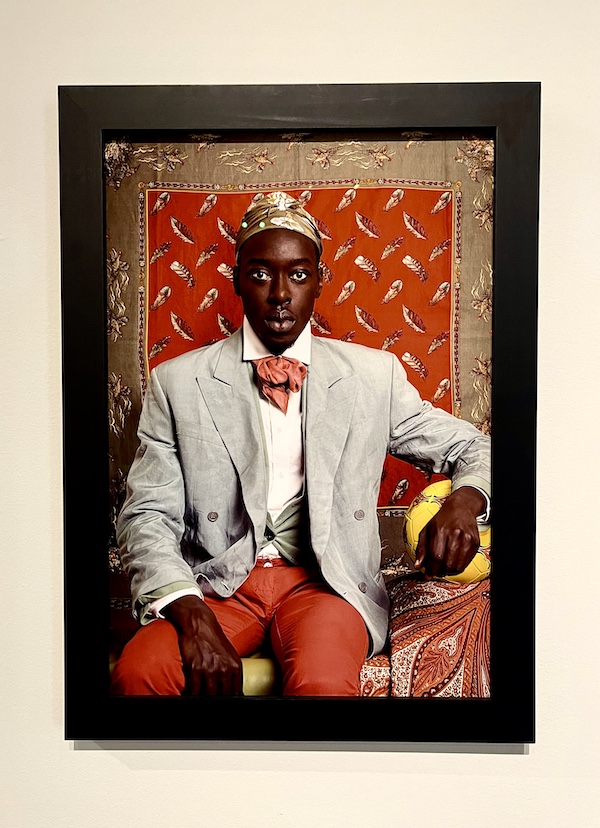
Omar Ibn Said, from the Diaspora series, 2015, by Omar Victor Diop, Senegalese, of pigment inkjet on Hahnemühle photo paper
Art from around the world is displayed on three floors and dates from ancient times to present day. The building itself is notable for its alabaster walls and Greco-Roman columns.
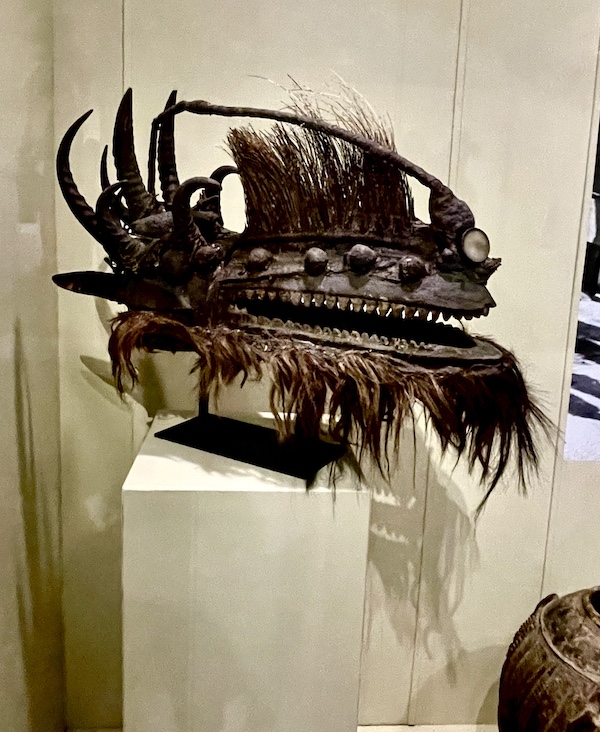
Kòmò Association Helmet Crest Mask by Bamana Peoples, Koulikoro region, Mali, of wood, animal fur, porcupine quills, duiker, oribi, and roan antelope horns, feathers, mirror and sacrificial patina
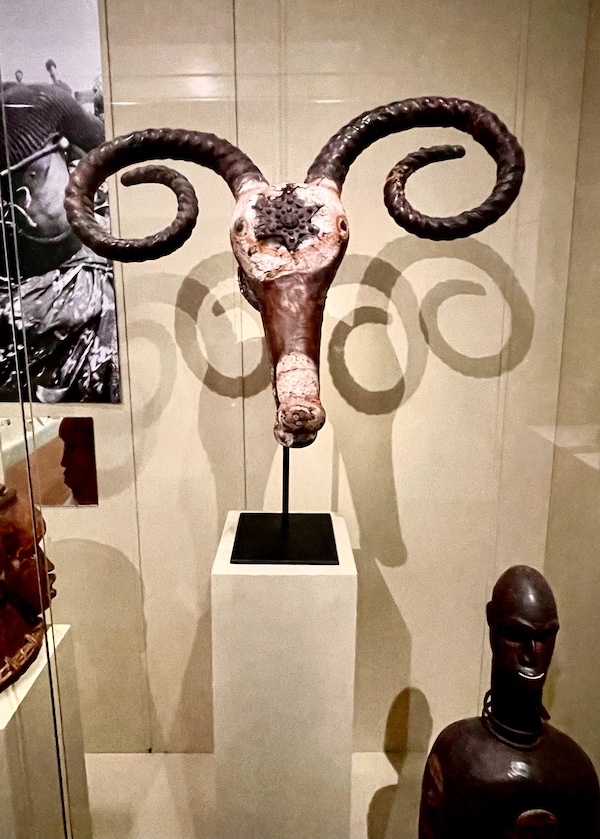
Animal Cap Crest Mask by Ejagham Peoples, Nigeria, of wood, caning basketry, animal skin, kaolin, pigment, cloth, metal and glass
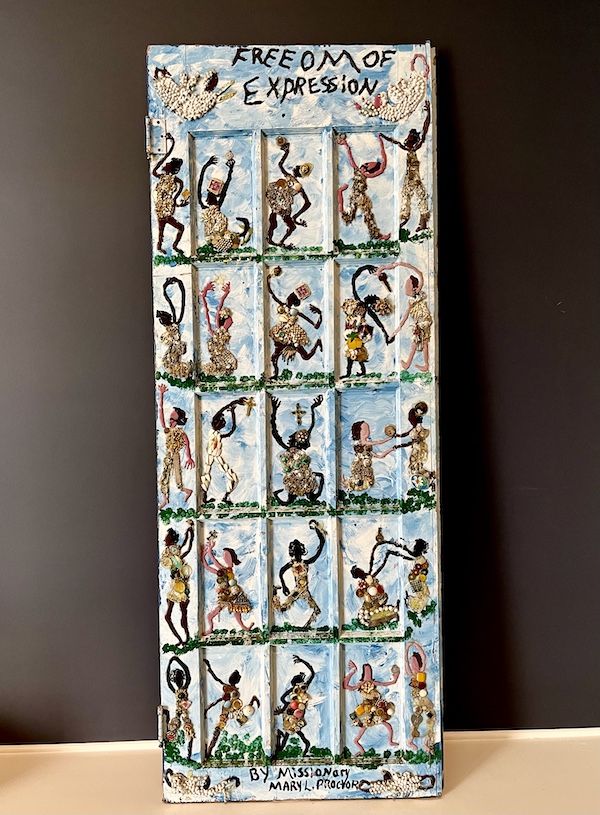
Freedom of Expression, 1998, by Mary L. Proctor, American, of costume jewelry, buttons, cowrie shells, paint on wood door
Gail and I began our journey through the ages of art on the third floor and worked our way down. By the time we got to the ground floor we’d spent several hours admiring the art and artifacts. We were exhausted! And our day together was far from over. We headed for the exit and waited for our chauffeur Steve to come and get us.
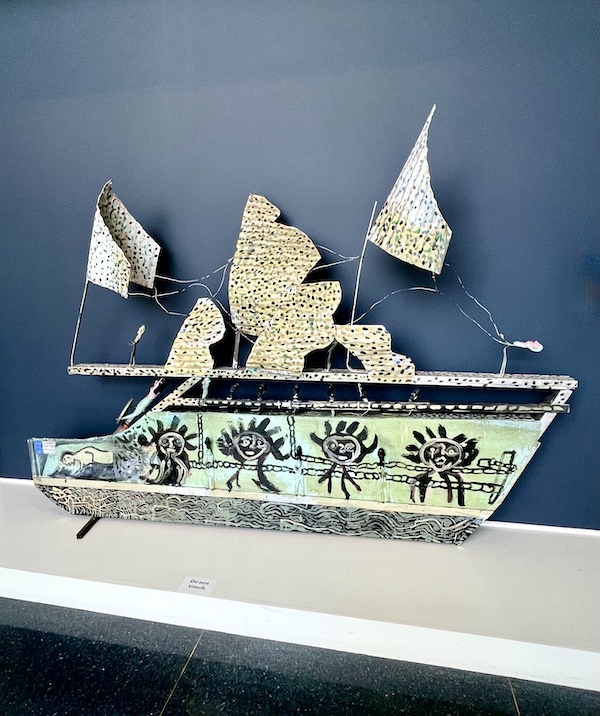
Slave Ship, 1987 by Thornton Dial, American, of metal, wood, paint, wire, industrial sealing compound
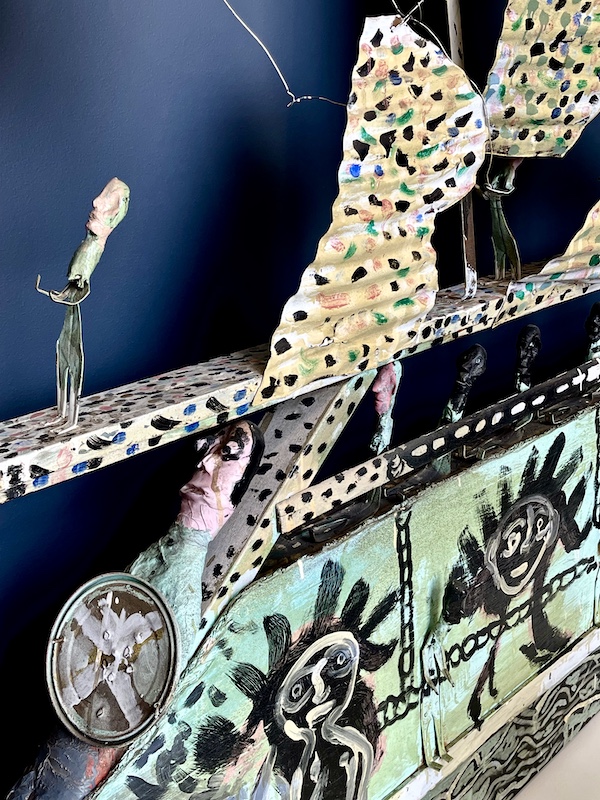
Detail of Slave Ship
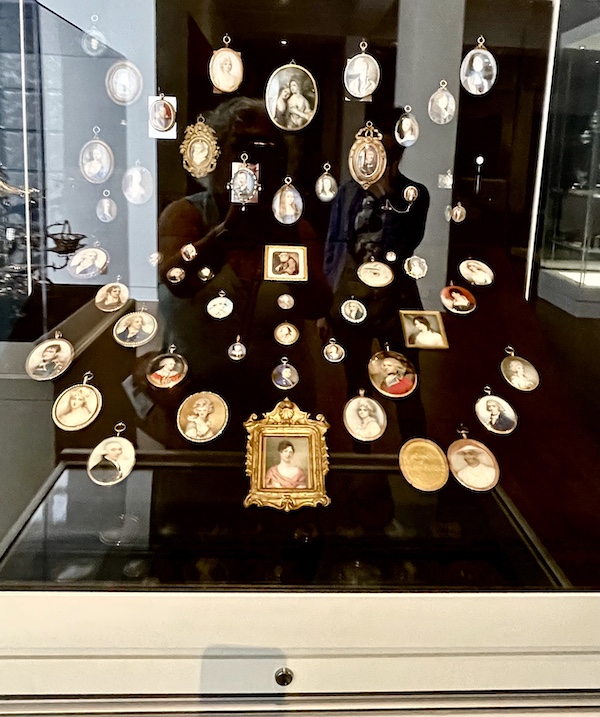
Miniature in Drawers
Exploring the astounding New Orleans Museum of Art was such a joy. But we experienced so much there and I took so many photos to share with you, that there will be a Part 2 next week. So stay tuned!
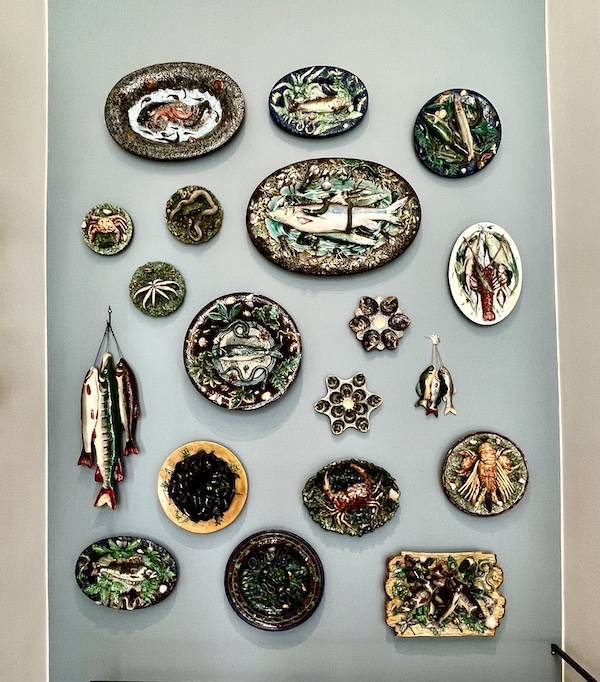
Menagerie of ceramic reptiles, shellfish and aquatic plants from 1800s made as a tribute to the European rustic ware of the 16th century
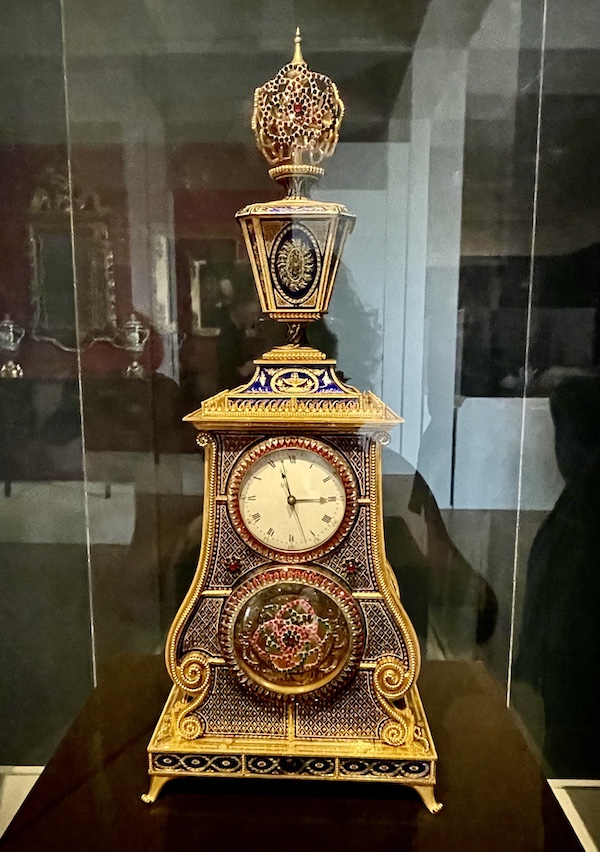
Automation Musical Clock, ca. 1800, likely made by Henry Borrell, clockmaker, in London for Chinese Market. Gilt bronze case, enamel, glass jewels and metal movements with some contemporary parts.
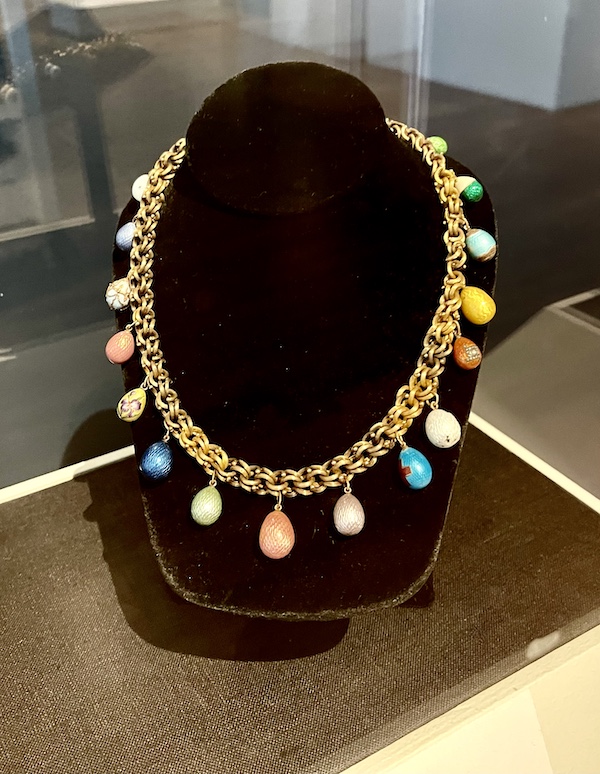
Necklace with 19 Miniature Easter Eggs, ca. 1855-1870 (chain), 1899-1918 (eggs), of gold, diamond, sapphire, guilloche enamel in various colors. Created in the Workshop of Carl Fabergé, Russian






Trackbacks/Pingbacks