The New Orleans Museum of Art has an art collection that is so extensive and memorable that I’m now bringing you Part 2! For Part 1 click here.
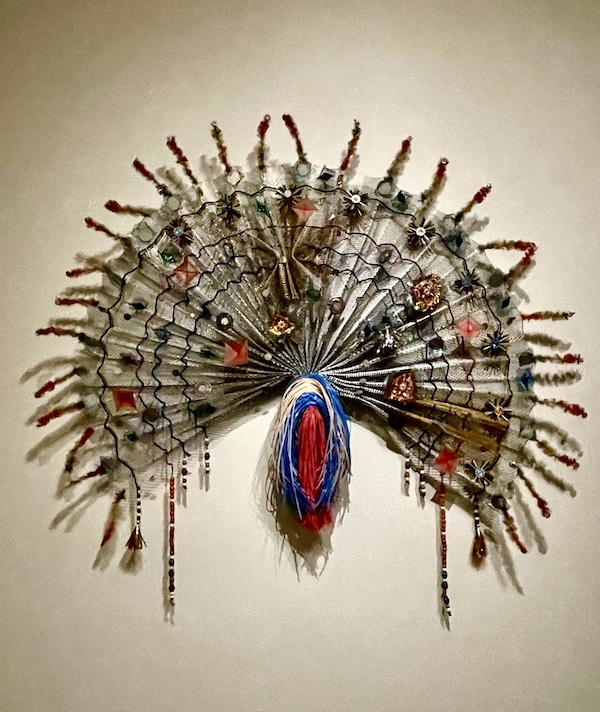
Lynda Benglis, American. Brindaban Pink, 1979, aluminum wire, copper, plastic, glass and enamel.
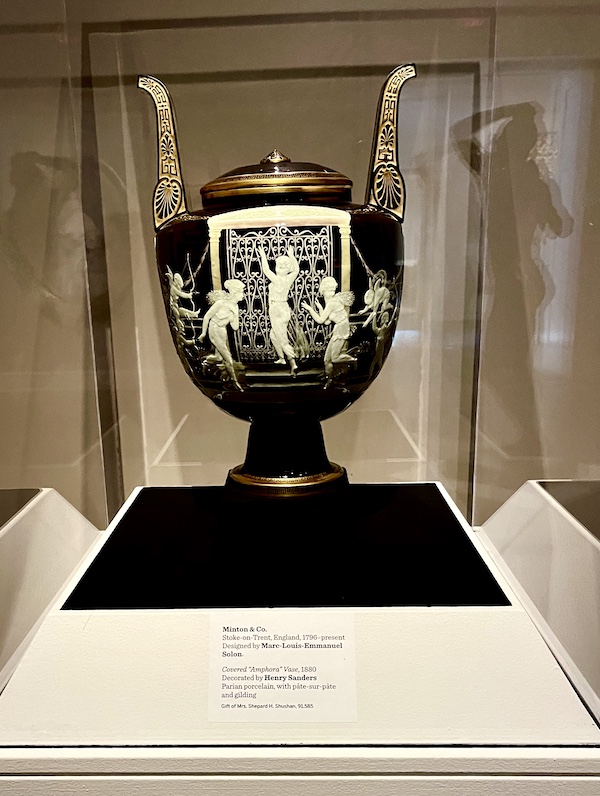
Covered “Amphora” Vase, 1880, of Parian porcelain, with pâte-sur-pâte and gilding. Produced by Minton and Co., decorated by Henry Sanders
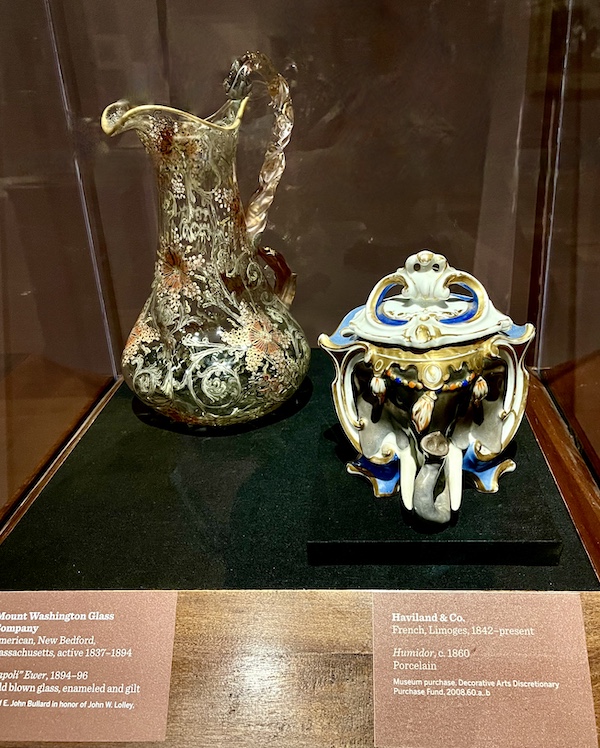
On left: Mount Washington Glass, Company, American. “Napoli” Ewer, 1894-96 of mold blown glass, enameled and gilt
On right: Haviland and Co., French, Limoges. Humidor, circa 1860 of Porcelain.
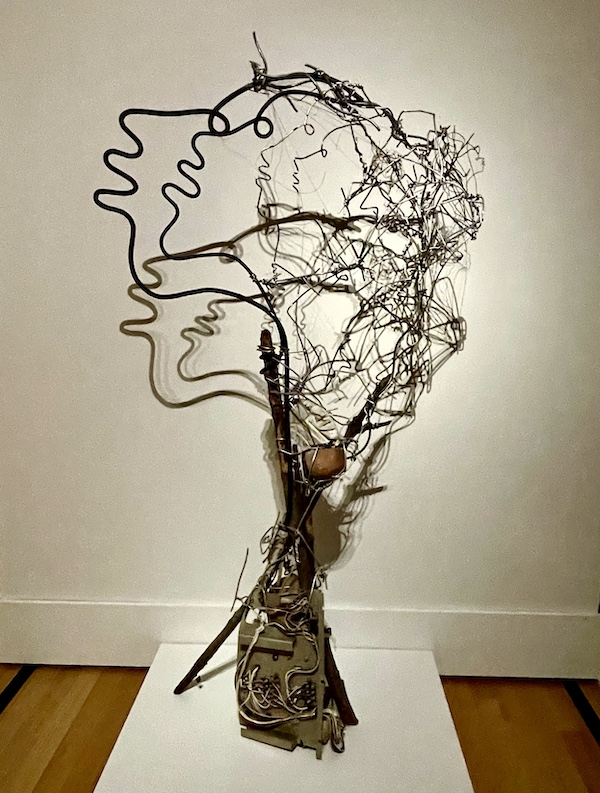
Lonnie Holley, American. Supported by the Power, 2003, mixed media
By the time we had descended to the second floor of NOMA, Gail and I realized that the art was far more modern. Most of the work was from the 19th century to current times. These pieces really spoke to us and I want to share what they had to say.
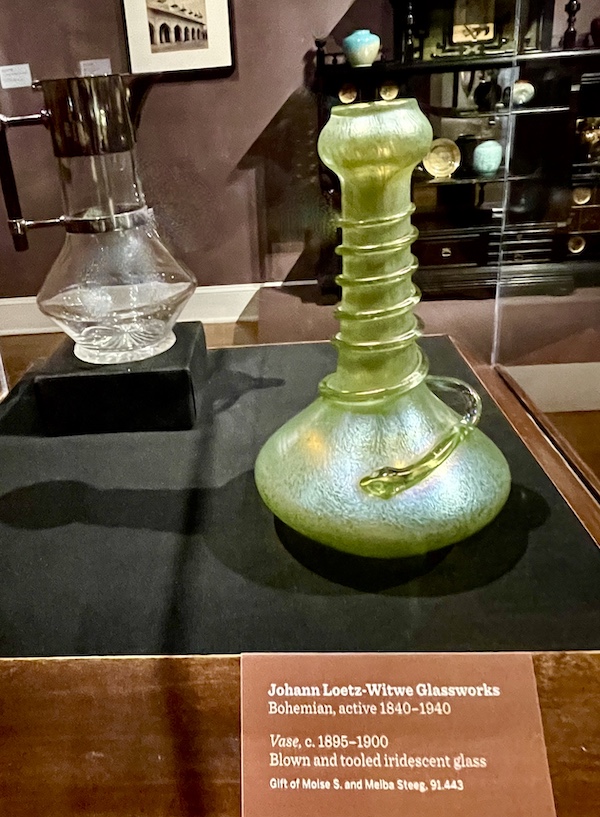
Johann Loetz-Witwe Glassworks, Bohemian. Vase, circa 1895-1900 of blown and tooled irredscent glass.
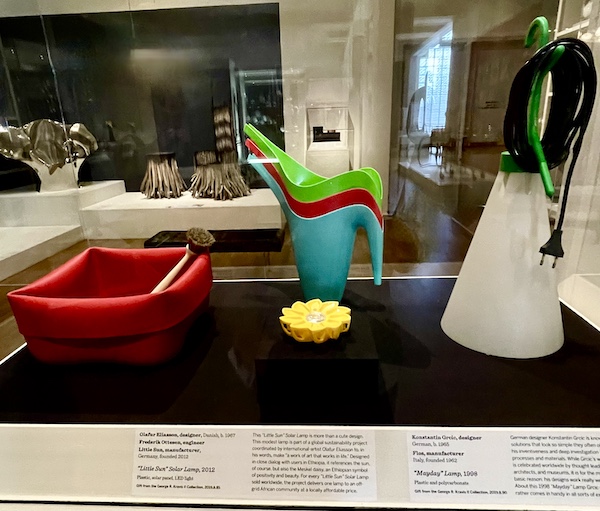
Colorful designs by Danish designer Olafur Eliasson, 2012
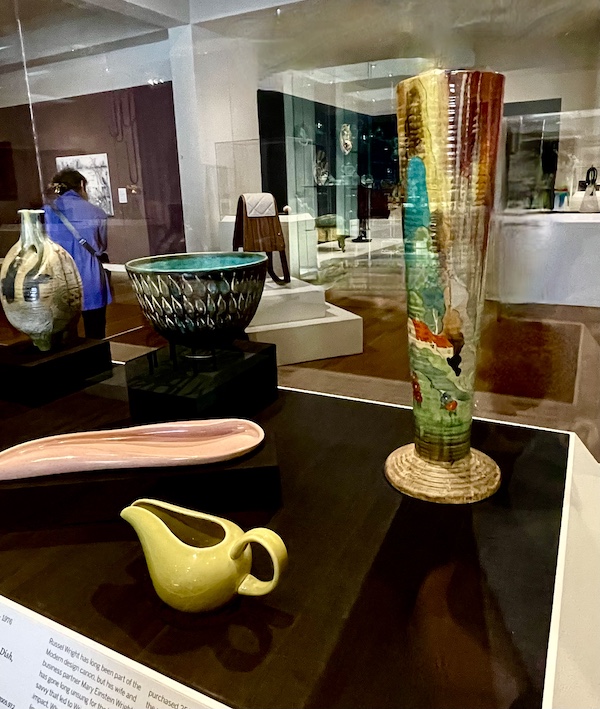
American Modern Creamer and Celery Dish, 1937 design by Russel Wright, American Designer
Starting with Russel Wright and his wife Mary Einstein Wright, whose work I was immediately drawn to for their color, shapes and usefulness. The American Modern ceramic pieces that they created were unconventional for the 1930s. But I could certainly see myself setting a table with that celery dish and creamer to go along with my collection of Fiestaware!
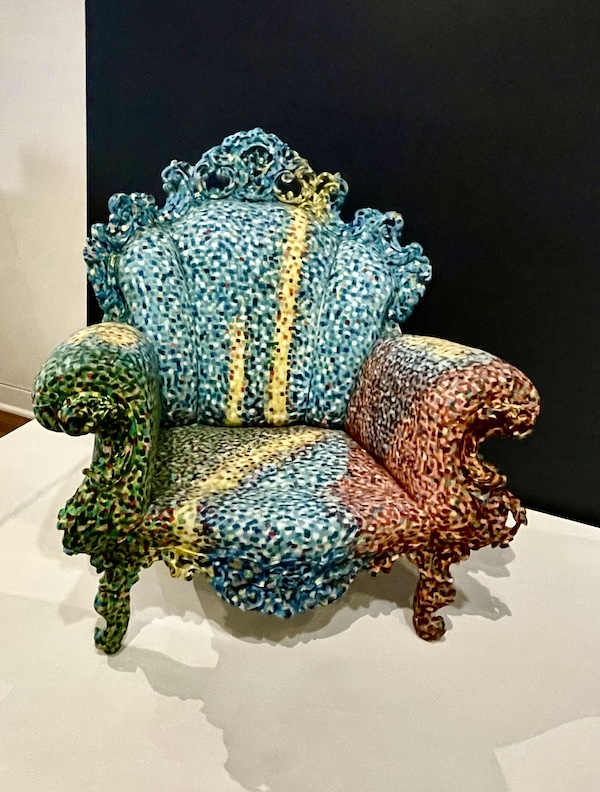
Proust Armchair, by Allessandro Mendini, designed in 1978, made in 1985. Carved and hand painted wood with hand painted upholstery
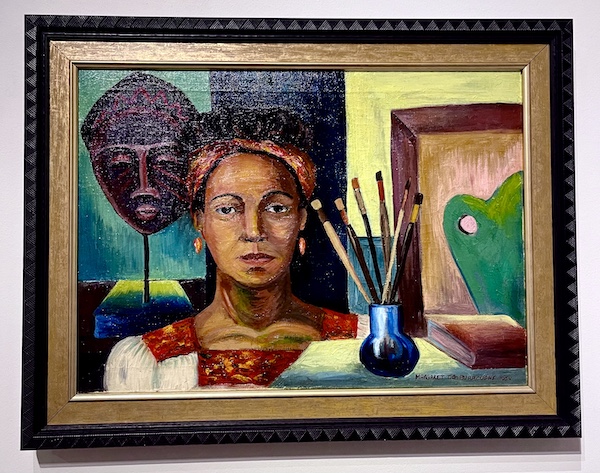
Margaret T.G. Burroughs, American. Self-Portrait, 1954, oil on canvas
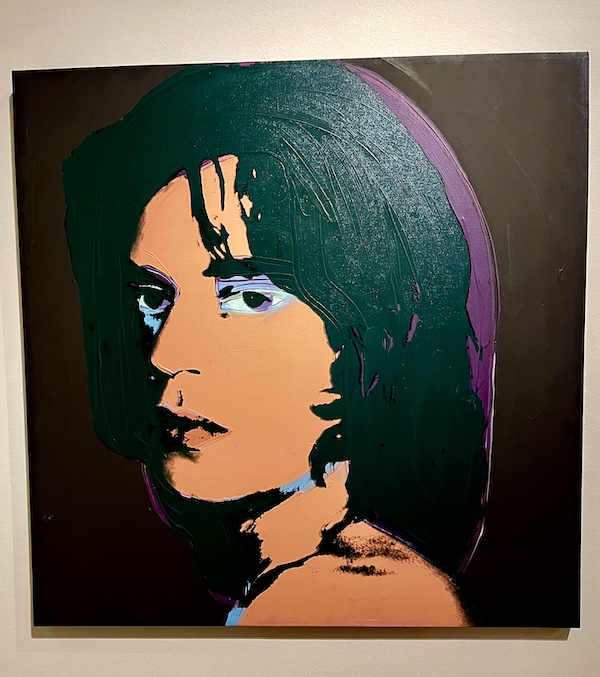
Andy Warhol, American. Mick Jagger, 1975, acrylic on canvas
The Proust Armchair by Alessandro Mendini begged me to snuggle in its colorful cushiony arms. Of course I resisted because it was an iconic Postmodern design that was hand painted in all of my favorite colors. It was art and not a piece of living room seating.
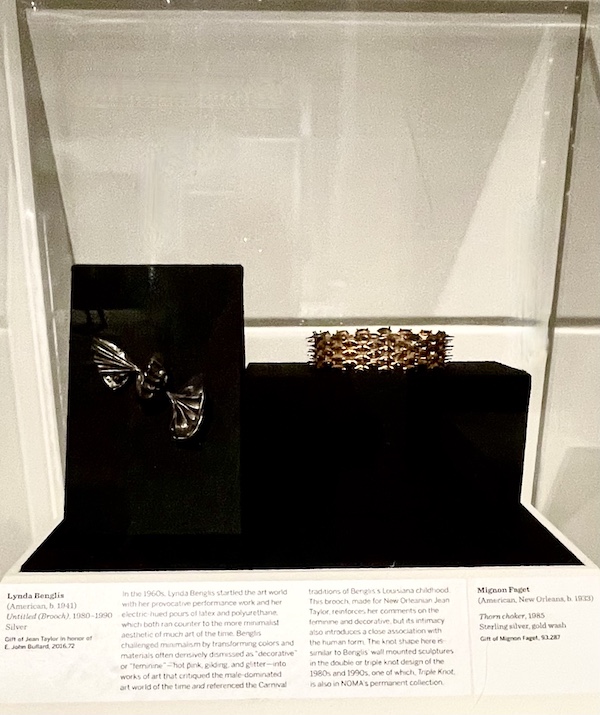
Thorn choker, 1985 by Mignon Faget, American. Choker made of Sterling silver with gold wash.
Many of you know that I love jewelry and create one of a kind pieces. So I was quite attracted to the Thorn Choker. But there was another fascination with that necklace. It was created by Mignon Faget, the same artist who painted my souvenir cocktail glass from our dinner at The Columns New Orleans. This New Orleans native was born in 1933 and creates some very outrageous pieces. Now that I’ve seen more of his work, I’m proud to display my glass.
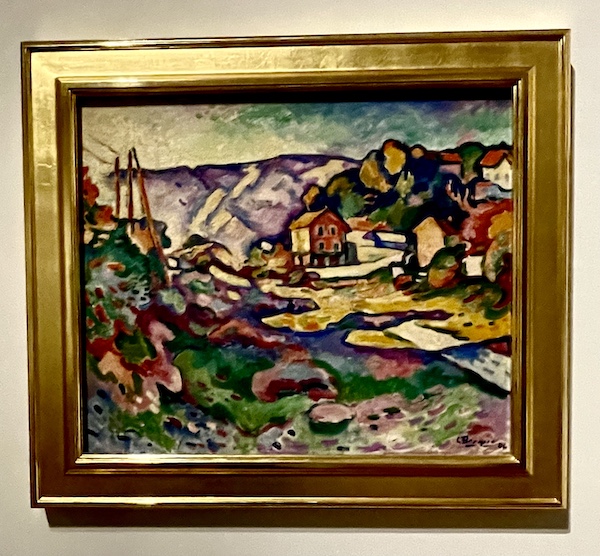
Georges Braque, French. Landscape at L’Estaque, 1906, oil on canvas
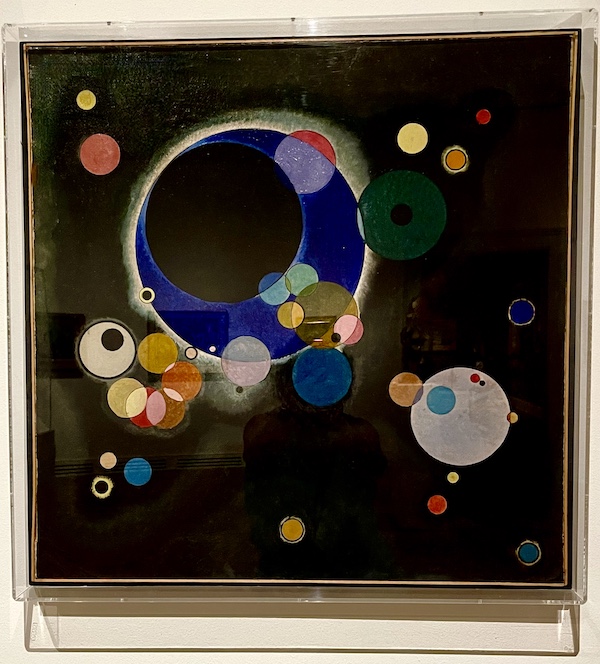
Wassily Kandinsky, French, born in Russia. Sketch for “Several Circles,” 1926, oil on paper, laid down on canvas
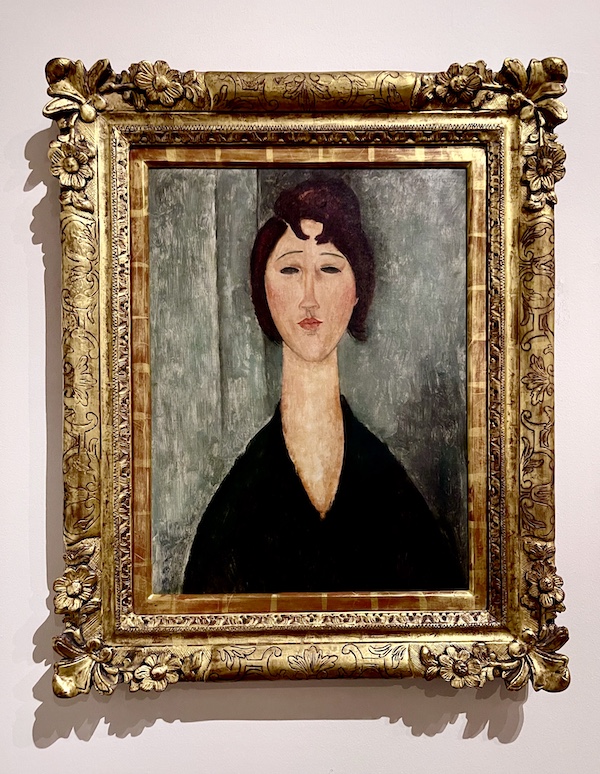
Amadeo Modigliani, Italian, active in France. Portrait of a Young Woman, 1918, oil on canvas
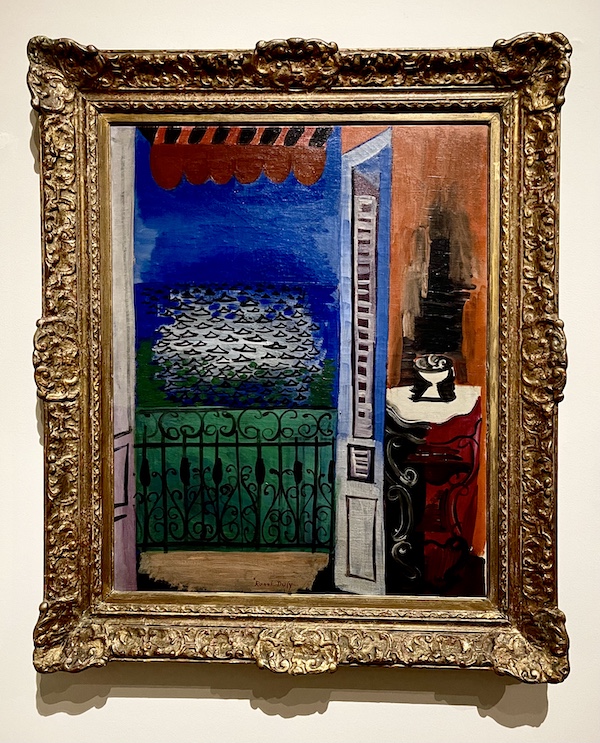
Raoul Dufy, French. The Window at Nice, 1923, oil on canvas
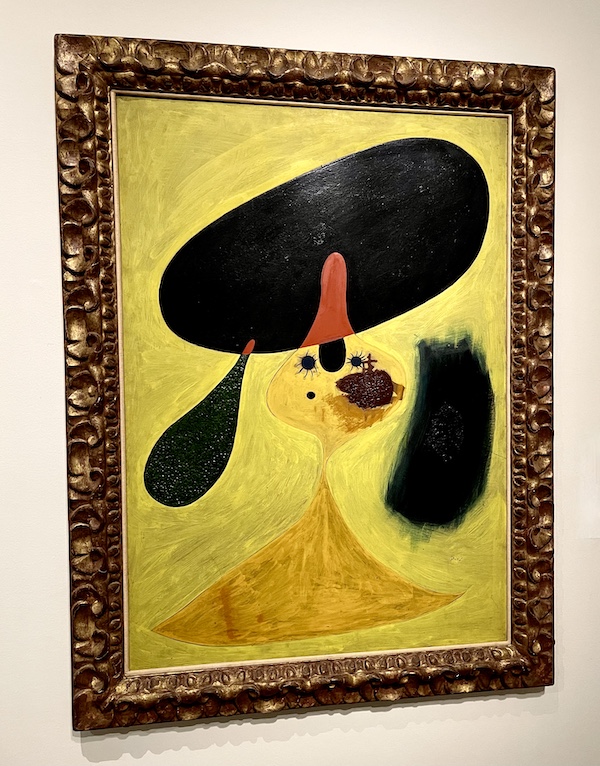
Joan Miró, Spanish. Portrait of a Young Girl, 1935, oil with sand on canvas
As an Art History major in college I have always been interested in the newer movements like fauvism, impressionism, abstract and so on. So to be able to enjoy pieces by Braque, O’Keeffe, Kandinsky, Modigliani, Miró and such.
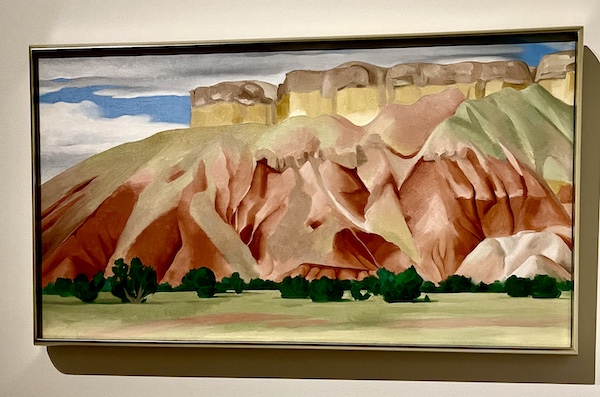
Georgia O’Keeffe, American. My Backyard, 1937, oil on canvas
I’ve been longing to visit the Georgia O’Keeffe museum in Santa Fe, but something keeps preventing us from getting there. I was excited to cast my eyes on her painting My Backyard. It gave me an inkling of what her life in New Mexico looked like through her eyes. She strongly identified with the surrounding mountains which she portrayed with a painting that slips between traditional landscape and dreamlike abstraction.
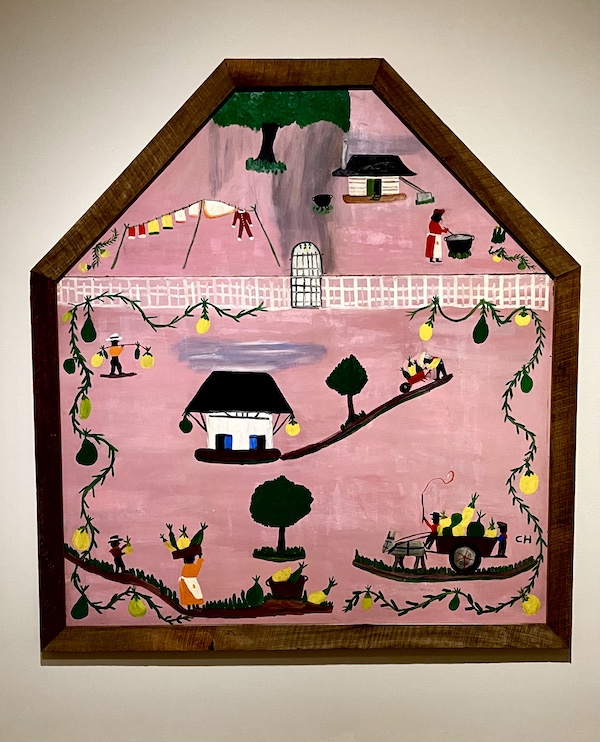
Clementine Hunter, American. Harvesting Gourds near the African House and Wash Day near the Ghana House, Melrose Plantation, 1959. oil on panel
But it was the Louisiana artists who told the best stories. Clementine Hunter’s painting tells a story of plantation life. It was created for Melrose Plantation near Natchitoches, Louisiana, where she lived and worked for her entire life. Hunter used abstract patterns and shapes to express the rhythm and flow of plantation life, along with its complicated politics.
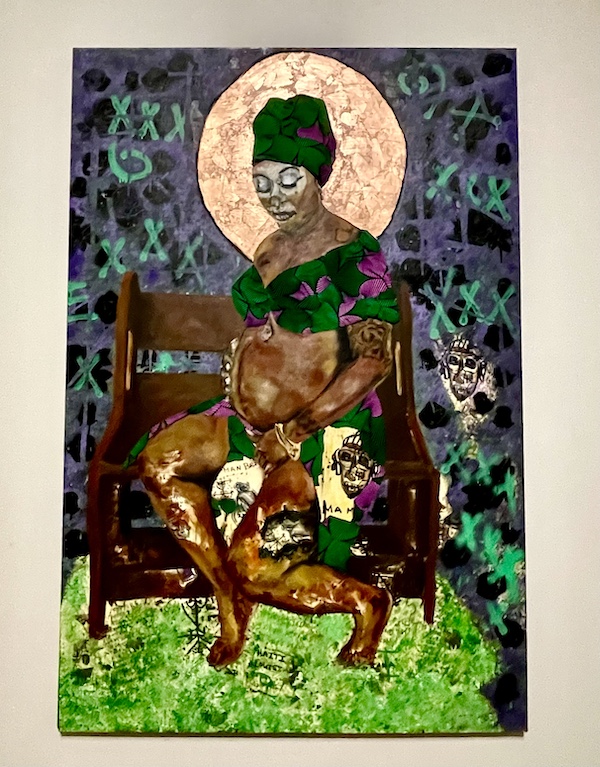
John Lister, III, American. Maman Brigitte Maman’s Day, 2021, mixed media on wood panel
And Shreveport born John Lister, III relates a powerful story in his painting Maman Brigitte Maman’s Day. In this piece meant to “honor motherhood and fertility”, Lister had a vision for a modern day Black Madonna. In general his work draws on the histories of the African Diaspora, especially the forms and rituals of West African, Haitian and New Orleans Vodou. And you will also often notice references to Louisiana in his paintings
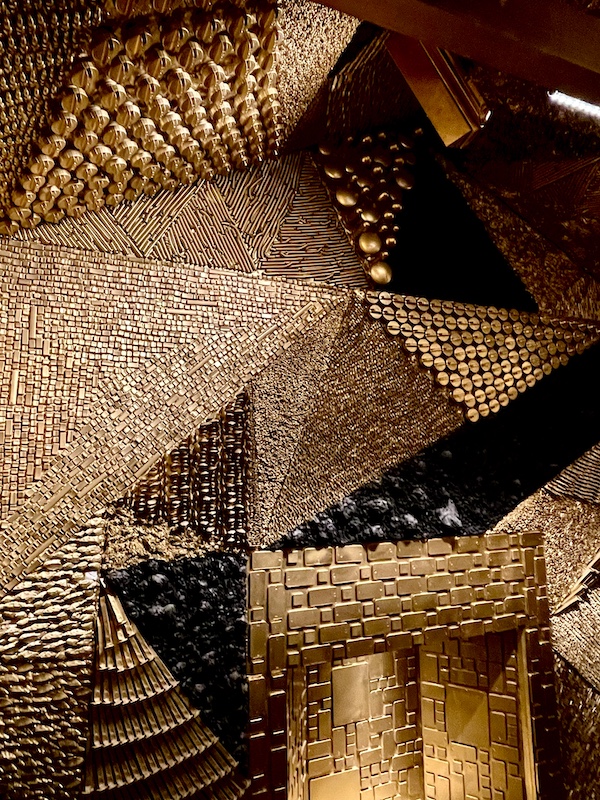
Will Ryman, American. America, 2013, wood, resin, arrowheads, chains, shackles, corn, cotton, coal, candy, bullets, railroad ties, cigarettes, gas caps, spark plugs, soda tabs, telephone cords, pills, keyboards, iPhones, iPads, lightbulbs and fiberglass.
The most unique art installation we saw was by New York artist Will Ryman and titled America. It was a large scale sculpture of sorts. In actuality America is a life size log cabin that he made of wood that he coated in gold resin. It is meant to represent the boyhood home of President Abraham Lincoln, who played a significant role in preserving the “Union of the United States during the Civil War and advancing the abolishment of slavery through the Emancipation Proclamation.” The gilt color of the cabin is representative of the gold so many sought in America, starting with the Spanish Conquistadors to the California Gold Rush and beyond.
When you walk inside the cabin you are surrounded by geometric, mosaic like sections on the floor, walls, ceiling and fireplace, all made of different materials. Together these different objects elude to the major industries and historical trends that shaped the American economy over the years. These sections, or panels, are arranged in stripes similar to those on the American flag. Evoking the livelihood of the indigenous peoples is an arrangement of arrowheads to show eventual conflicts with the colonists.
Shackles and chains form the foundation, alluding to the role that slavery played in shaping the USA. Various types of bullets used in American wars are used to encourage us to contemplate the role of the U.S. Military. Pills represent the pharmaceutical industry, railroad ties and automobile parts evoke transportation, cotton connects us to the history of textiles, corn is for agriculture and coal equals energy. As you walk through the cabin you will also notice soda tabs for fast food and phone cords for the telecommunication industry. Ryman also included keyboards, iPads and iPhones to encourage us to consider the role that recent technology plays in our lives.
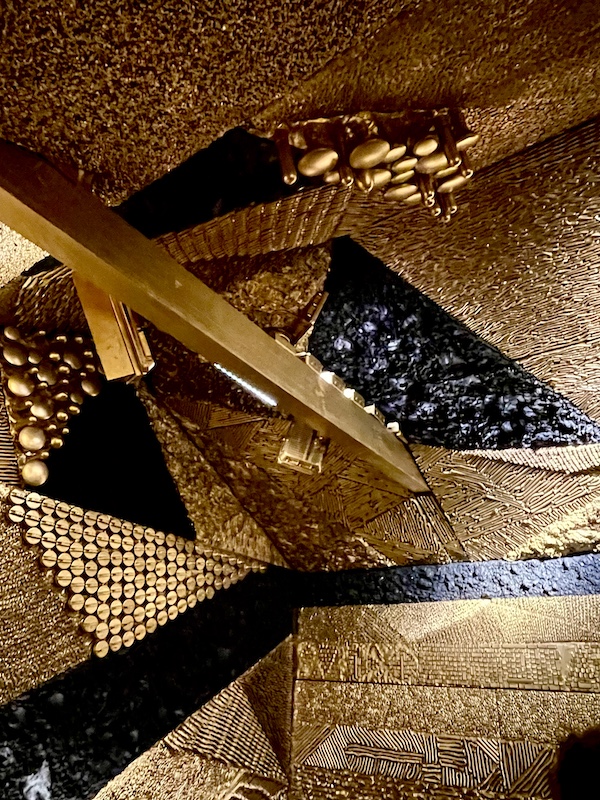
Another section of the art in the previous photo.
Now that is what I call a well thought out and very thought provoking piece!!!